Articles Tagged with Fort Lauderdale criminal defense attorney

Fort Lauderdale’s beaches, nightlife, and year-round sunshine attract millions of visitors annually. From spring breakers to business travelers, tourists flock to Broward County to enjoy everything South Florida has to offer. But what happens when a vacation takes an unexpected turn—when a night out results in an arrest, or a misunderstanding with law enforcement leads to criminal charges?

If you find yourself facing criminal charges in Broward County, whether you’re a local resident or an out-of-town visitor, your choice of legal representation can profoundly impact the outcome of your case. Fort Lauderdale criminal defense attorneys recognize this is where the “local advantage” is essential.

Understanding the 17th Judicial Circuit Court

Broward County’s criminal cases are prosecuted through the 17th Judicial Circuit Court, one of the largest judicial circuits in Florida and the second-largest in the state. The main courthouse is located at 201 SE 6th Street in Fort Lauderdale, with additional locations in Deerfield Beach and Plantation. This circuit handles everything from misdemeanor offenses in County Court to serious felonies in Circuit Court.

The volume and complexity of cases moving through this system is staggering. With a population exceeding 1.9 million residents and millions of visitors each year, Broward County’s courts process tens of thousands of criminal cases annually. Each case moves through a complex procedural framework governed by Florida Statutes and the Florida Rules of Criminal Procedure.

The Critical Role of the State Attorney’s Office

At the heart of every criminal prosecution in Broward County is the Office of the State Attorney for the 17th Judicial Circuit, currently led by State Attorney Harold F. Pryor. This office employs over 460 staff members, including approximately 213 assistant state attorneys (prosecutors) who handle the day-to-day prosecution of criminal cases.

The State Attorney’s Office isn’t a monolithic entity—it’s comprised of specialized divisions and units tailored to different types of crimes. There are prosecutors who focus exclusively on DUIs, domestic violence cases, drug offenses, white-collar crimes, and violent felonies. Each division has its own approach, priorities, and internal policies that can significantly affect how cases are handled.

Why Local Knowledge Matters: The Prosecutor Factor

When you hire a Fort Lauderdale criminal defense attorney with deep roots in the 17th Circuit, you’re not just hiring legal knowledge—you’re hiring relationships, reputation, and institutional memory. Here’s why that matters:

1. Understanding Prosecutorial Tendencies

Experienced local defense attorneys know the individual prosecutors. They understand who is more likely to negotiate, who takes a hardline stance on certain offenses, and who responds better to particular types of evidence or arguments. This isn’t about personal friendships—it’s about professional experience and pattern recognition that develops over years of practice.

A Fort Lauderdale criminal defense attorney who regularly appears in the 17th Circuit knows which prosecutors are newly assigned to a division and still learning the ropes, and which are seasoned veterans with decades of experience. This knowledge allows for more strategic case planning and more effective negotiations.

2. Familiarity with Internal SAO Policies

The Broward State Attorney’s Office has internal guidelines for plea negotiations, diversion programs, and charging decisions that aren’t published or widely known outside the legal community. A local attorney understands which cases might qualify for pretrial intervention programs, which offenses the SAO is currently prioritizing for enforcement, and how policy shifts under new leadership affect case outcomes.

For example, different State Attorneys may have varying approaches to prosecuting first-time offenders, drug possession cases, or specific types of violent crimes. An attorney who’s been practicing in Fort Lauderdale through these changes brings invaluable historical perspective.

3. Credibility and Professional Reputation

Reputation matters in criminal defense. When a respected Fort Lauderdale criminal defense attorney makes a representation to the court or to opposing counsel, their word carries weight. Prosecutors know which attorneys have track records of honesty, thorough preparation, and aggressive but ethical advocacy.

This credibility can make the difference in critical moments—when asking for a continuance, negotiating a plea deal, or making an argument for reduced charges. An out-of-town attorney, no matter how skilled, starts without this established trust.

The Judge Factor: Knowing the Bench

Fort Lauderdale criminal defense attorney

Beyond prosecutors, local knowledge extends to the judiciary. The 17th Judicial Circuit includes dozens of circuit and county judges, each with their own judicial philosophy, courtroom procedures, and pet peeves.

Understanding Individual Judges

A Fort Lauderdale criminal defense attorney who practices regularly in the 17th Circuit knows:

  • Which judges are strict about punctuality and courtroom decorum
  • Which judges prefer detailed written motions versus oral arguments
  • How different judges approach bond hearings, suppression motions, and sentencing
  • Which judges have particular expertise or interest in certain areas of law
  • How judges typically rule on common pretrial motions

This knowledge isn’t just helpful—it can be case-altering. For instance, knowing that a particular judge is receptive to evidence-based arguments about substance abuse treatment can inform whether to push for drug court versus traditional prosecution. Understanding a judge’s approach to Fourth Amendment issues can determine whether to file a motion to suppress evidence.

Courthouse Culture and Procedures

Every courthouse has its own culture and unwritten rules. The 17th Circuit has specific local procedures for everything from filing motions to scheduling hearings to handling emergency bond matters. According to Florida Rule of Criminal Procedure 3.130, arrested individuals must be brought before a judicial officer within 24 hours for a first appearance—but how those hearings are conducted, what information judges expect, and how to effectively advocate at first appearance varies by jurisdiction.

A local Fort Lauderdale criminal defense attorney navigates these procedures seamlessly because they’re second nature. They know which clerk’s office to contact for expedited matters, how to properly notice a motion in the 17th Circuit, and what documentation judges expect at various stages of proceedings.

The Out-of-Town Visitor: When Local Representation Matters Most

If you’re arrested while visiting Fort Lauderdale—whether for vacation, business, or family—hiring a local Fort Lauderdale criminal defense attorney becomes even more critical. Here’s why:

1. You Can’t Just Leave

Continue reading

Traffic stops are among the most common interactions between citizens and law enforcement in Florida. While most traffic stops end with a warning or citation, some escalate to vehicle searches that can lead to serious criminal charges. Our Fort Lauderdale criminal defense lawyers believe that understanding when police can legally search your vehicle is essential knowledge for every driver in Broward County.defense attorney Fort Lauderdale

The Legal Framework for Vehicle Searches

The Fourth Amendment Protection

The Fourth Amendment to the United States Constitution provides the fundamental protection against unreasonable searches and seizures:

“The right of the people to be secure in their persons, houses, papers, and effects, against unreasonable searches and seizures, shall not be violated, and no Warrants shall issue, but upon probable cause, supported by Oath or affirmation, and particularly describing the place to be searched, and the persons or things to be seized.”

While this protection extends to vehicles, the U.S. Supreme Court has established that automobiles are subject to a reduced expectation of privacy compared to homes or persons, creating what’s known as the “automobile exception” to the warrant requirement.

Florida Constitutional Protections

Article I, Section 12 of the Florida Constitution mirrors the Fourth Amendment’s protections. However, it’s important to note that in 1982, Florida voters amended this section to conform with U.S. Supreme Court interpretations of the Fourth Amendment, meaning Florida courts generally follow federal search and seizure precedents.

When Police CAN Search Your Vehicle in Fort Lauderdale

1. With a Valid Search Warrant

Police can search your vehicle if they have obtained a valid search warrant from a judge. The warrant must specifically identify your vehicle and describe what the officers are looking for. However, given the mobile nature of vehicles, warrant-based searches are relatively uncommon in traffic stop situations.

2. With Your Consent

One of the most common ways police search vehicles is through voluntary consent. If an officer asks, “Do you mind if I take a look inside your vehicle?” and you agree, you’ve waived your Fourth Amendment protections.

In Florida, consent must be freely and voluntarily given to be valid. In the 1968 case of Bumper v. North Carolina, the Supreme Court established that consent obtained through deception or coercion is invalid. However, per the 1973 U.S. Supreme Court ruling in Schneckloth v. Bustamonte, police do not need to inform you of your right to refuse consent.

3. Probable Cause

Police may search your vehicle without a warrant or consent if they have probable cause to believe evidence of a crime is present. This exception has been consistently upheld by both federal and state courts.

Common scenarios that might establish probable cause include:

  • Visible contraband in “plain view” through your car windows
  • The smell of drugs (particularly marijuana)
  • Alert from a properly trained K-9 unit to the presence of narcotics
  • Information from a reliable informant

In the 1999 ruling of Maryland v. Dyson, the U.S. Supreme Court clarified that the automobile exception does not require exigent circumstances beyond the vehicle’s inherent mobility.

4. Incident to Lawful Arrest

If you are lawfully arrested, police may conduct a limited search of your vehicle’s passenger compartment if they reasonably believe it contains evidence related to the offense of arrest.

It’s worth noting that this exception was narrowed in 2009 by the U.S. Supreme Court in Arizona v. Gant. The court held that police can’t search a vehicle incident to arrest after the arrestee has been secured and can’t access the vehicle’s interior – unless it’s reasonable to believe evidence relevant to the crime of arrest might be found in the vehicle.

5. Inventory Searches

When police legally impound a vehicle, they may conduct an “inventory search” without a warrant or probable cause. This administrative procedure is meant to document the vehicle’s contents, protect against claims of theft, and identify potential dangers.

For an inventory search to be valid, it must follow standardized department procedures and cannot be a pretext for an investigative search. As noted in the 1981 Florida Supreme Court case of Miller v. State, inventory searches must be conducted in good faith for the purpose of protecting property, or else it may violate the 4th Amendment rights of the accused.

When Police CANNOT Search Your Vehicle

1. Based Solely on a Traffic Violation

Continue reading

Every March 17th, Fort Lauderdale comes alive with shades of green, Irish tunes and the clink of celebratory drinks. St. Patricks’ Day is a time for fun and festivities here in South Florida, complete with parades and parties. However, St. Patrick’s Day also typically sees a sharp rise in drunk driving arrests. If you or someone you love is now facing a DUI charge after a St. Patrick’s Day celebration, it’s unwise to count on a stroke of good luck to protect your future.St. Patrick's Day DUIs in Fort Lauderdale DUI lawyer

At The Ansara Law Firm, our Fort Lauderdale criminal defense attorneys believe your future is worth protecting, and we won’t let you face the criminal justice system alone. We’ve seen firsthand how a single DUI arrest can impact a person’s life. But we’ve also helped many individuals navigate Florida’s legal system, preserve their rights, and move forward with strength and dignity.

The Reality of St. Patrick’s Day DUIs in Fort Lauderdale

According to the National Highway Traffic Safety Administration (NHTSA), St. Patrick’s Day consistently ranks among the top holidays for alcohol-related crashes. Nationally, there were 290 people killed in alcohol-impaired crashes during the St. Patrick’s Day holiday – from 6 p.m. March 16th to 6 a.m. March 18th – between 2018 and 2022. Drivers who are young (21 to 34), male, and driving at night were overrepresented in the crash statistics.

Florida is no exception to this troubling trend. The Florida Department of Highway Safety and Motor Vehicles (FLHSMV) reports March consistently sees a spike in DUI arrests and alcohol-related crashes, especially mid-month during St. Patrick’s Day celebrations. (Spring break festivities undoubtedly play a role as well.)

Law enforcement agencies across the state, including those in Fort Lauderdale and throughout Broward County, ramp up DUI checkpoints and saturation patrols around this time of year specifically for that reason. So even if you aren’t involved in a crash, you’re more likely to get arrested for a DUI around this time simply because police are specifically on the lookout for impaired drivers.

Florida DUI Laws and Penalties

If you’re arrested for DUI in Fort Lauderdale, it’s essential to understand the legal definitions and potential penalties. Under Florida Statute F.S. 316.193, a driver can be charged with a DUI if they:

  • Have a blood-alcohol concentration (BAC) of 0.08% or higher, or
  • Are under the influence of alcohol or drugs to the extent that their normal faculties are impaired.

That last bit is somewhat subjective. As a DUI defense lawyer can explain, law enforcement officers will use their own personal observations, as well as information gleaned from field sobriety tests, in determining whether one’s “normal faculties are impaired.” Unlike breathalyzer tests, field sobriety tests (such as the walk-and-turn and the horizontal gas nystagmus test) are not mandatory and you can decline to submit to them.

  • For a first-time DUI in Fort Lauderdale, penalties include:
  • Up to 6 months in jail (or up to 9 months if your BAC is 0.015% or higher OR if a minor child was in the vehicle at the time of your arrest)
  • Fines between $500 and $1000 (or up to $2,000 if your BAC is 0.15% or higher)
  • License suspension for 6 months to 1 year
  • Probation for up to 1 year
  • 50 hours of community service
  • Vehicle impoundment for 10 days

Beyond the clear legal consequences, a DUI conviction can have other lasting repercussions on your life. These include: Continue reading

Push notifications – those pop-up alerts on your phone generated by apps when you aren’t using them – are now being used by federal and state police in criminal investigations.

As a Fort Lauderdale criminal defense lawyer, it’s my job to stay up-to-date on the ways in which Florida criminal investigations are evolving – which they are doing constantly as technology advances. Push notification intel, metadata generated by the app companies, are one we expect will catch more than a few folks by surprise. Already, their use has raised alarm among privacy experts. Fort Lauderdale criminal defense lawyer push notification investigations

Also known as “push alerts,” they’re pretty much standard with use of any modern smartphone. They essentially “wake up” the phone to alert users to important updates or news, without the user having to constantly keep the phone on (and also without the user’s interaction). When they are sent, they generate a small string of code, known as a push token. That little bit of data is stored on servers owned by Google and Apple (out of reach of users), which can be requested or subpoenaed by police to pinpoint the email addresses, device, and location of individuals suspected of crimes. It can also tell investigators who you’re talking to and sometimes the content of those communications.

It’s been used on apps like Talkatone (a phone service) and encrypted messaging apps like TeleGuard and Wickr. Although these apps promised users it would save no data, developers still crafted a system of collecting push tokens linking back to users through push notifications. Police have even been able to successfully obtain the two-factor authentications for these apps by requesting coding from the tech companies.

Although some of this information has been simply handed over to law enforcement upon request, company polices are slowly shifting to require court orders before doing so. But as a Fort Lauderdale criminal defense lawyer can explain, that doesn’t necessarily ensure your data will be private – especially because such policies can often be sidestepped if the police are asserting “exigent” or emergency circumstances.

Although advocates say this data is mostly used for cases involving child pornography, kidnapping, and homicide, it’s not limited to those. The Washington Post was able to identify at least 130 search warrants and court orders that law enforcement agencies had submitted to Facebook, Google, Apple and other technology firms for push alerts data. Those included criminal investigations into cases involving drugs, guns, and the events of Jan. 6, 2021 in Washington, D.C. Continue reading

If you’re searching Broward criminal defense attorneys for hire, you’re likely wondering how much it’s going to cost. You’ve probably heard at least one attorney advertisement with the phrase, “We only get paid if you win.” Important to note: This does NOT apply to criminal defense lawyers – and for good reasons, which we’ll explain more later.Broward criminal defense attorneys

However, those with limited financial resources still have options.

If you’ve been arrested in Fort Lauderdale, it’s important to both carefully plan your next move and try your best to stay within budget. The right attorney can help you do that. Attorneys are ethically bound to only charge “reasonable” fees for their services. If their charges are excessive, they could face action from the state Bar Association.

Here, we’re going to break down how payments to Florida criminal defense lawyers work and what you can expect when hiring an attorney.

Your Right to Free Counsel

Most people have heard the phrase, “You have the right to an attorney… If you cannot afford one, one will be provided for you at no cost…”

This is part of the “Miranda Warning,” a required statement made prior to custodial interrogations (questioning that occurs after police have arrested or detained someone). However, people mistakenly assume that this right to free legal counsel applies to all criminal defendants. It does not.

Let’s start with the fact that the Sixth Amendment to the U.S. Constitution is what gives criminal defendants the right to counsel – regardless of whether they can afford it – in federal prosecutions. However, most criminal prosecutions in Florida occur at the state level, pursued by state-level prosecutors, who are referred to as state attorneys. The right to counsel was not applied to state prosecutions for felony offenses until the 1963 U.S. Supreme Court ruling in Gideon v. Wainwright. The incorporation doctrine applied this right to state felony cases, but it does not apply for certain misdemeanors.

In Florida state-level prosecutions, you do have the right to a state-appointed criminal defense lawyer if:

  • You are facing jail time AND
  • You cannot afford one on your own.

If you can afford to hire your own lawyer, it’s a good idea to do so. We have known excellent criminal defense lawyers working for the Florida Public Defender’s Office. However, they are often carrying heavy caseloads, and may not have a great deal of time to dedicate to your case. Hiring a private criminal defense lawyer is typically to your advantage.

It’s a common misconception that because you aren’t appointed a criminal defense lawyer that you don’t need one. While lower-level misdemeanors may not involve jail time, a conviction can often have a significant impact on your life – one that a qualified criminal defense lawyer can work to substantially mitigate. It is typically to your advantage – financially and otherwise – to hire a Broward criminal defense lawyer even for misdemeanor cases.

Why Can’t Florida Criminal Defense Lawyers Be Paid on a Contingency Fee Basis?

The phrase, “We don’t get paid unless you win” refers to a contingency fee arrangement with an attorney. Continue reading

You can take video of police officers in public without risking a Florida arrest, an appellate court ruled this month. The decision pertains to a 2009 case of a woman who filmed officers detaining her son outside a Boynton Beach movie theater. As our Fort Lauderdale criminal defense lawyers recognize, however, it has particular relevance in the post-George Floyd era.Fort Lauderdale criminal defense lawyer

The ruling in Ford v. City of Boynton Beach reversed an earlier trial court decision that found police had an expectation of privacy when they were filmed outside the movie theater. In sworn testimony, she indicated she took a digital camera with her when she went to get her son, who had been stopped by police for allegedly trying to sneak into a movie theater. Her intent, she said, was to ensure the police would be honest and truthful during the encounter.

When police demanded she stopped filming, she refused. Although it was undisputed that she never tried to physically obstruct or in any way impede the officers’ detention of her son, she was arrested on charges of intercepting oral communications and obstruction without violence – both misdemeanors. The officers argued she had invaded their privacy, justifying the charges. The State Attorney’s Office, however, declined to pursue the charges ages ago. The ruling in this case stems from a civil lawsuit she later filed against the department. Continue reading

Can police in Florida legally compel a defendant in a criminal case to unlock their cell phones? Our Fort Lauderdale criminal defense lawyers understand that question for now remains unresolved, after the defendant reached a plea deal, rendering appeal to the Florida Supreme Court moot. Fort Lauderdale criminal defense lawyer

As a local NPR affiliate reported, the question arose from a case out of Alachua County, an alleged drug-deal-turned-robbery. One of the victims reportedly recognized one of the defendants whose mask was temporarily removed. Police questioned the defendant (now 22) and seized his cell phone from his vehicle. But it was locked by a passcode.

Police asked asked a judge to compel the defendant provide the passcode. Like many government agencies in recent years, police argued this type of digital encryption, protecting personal information stored in an electronic device like a smartphone or iPad, can impede criminal investigations. Continue reading

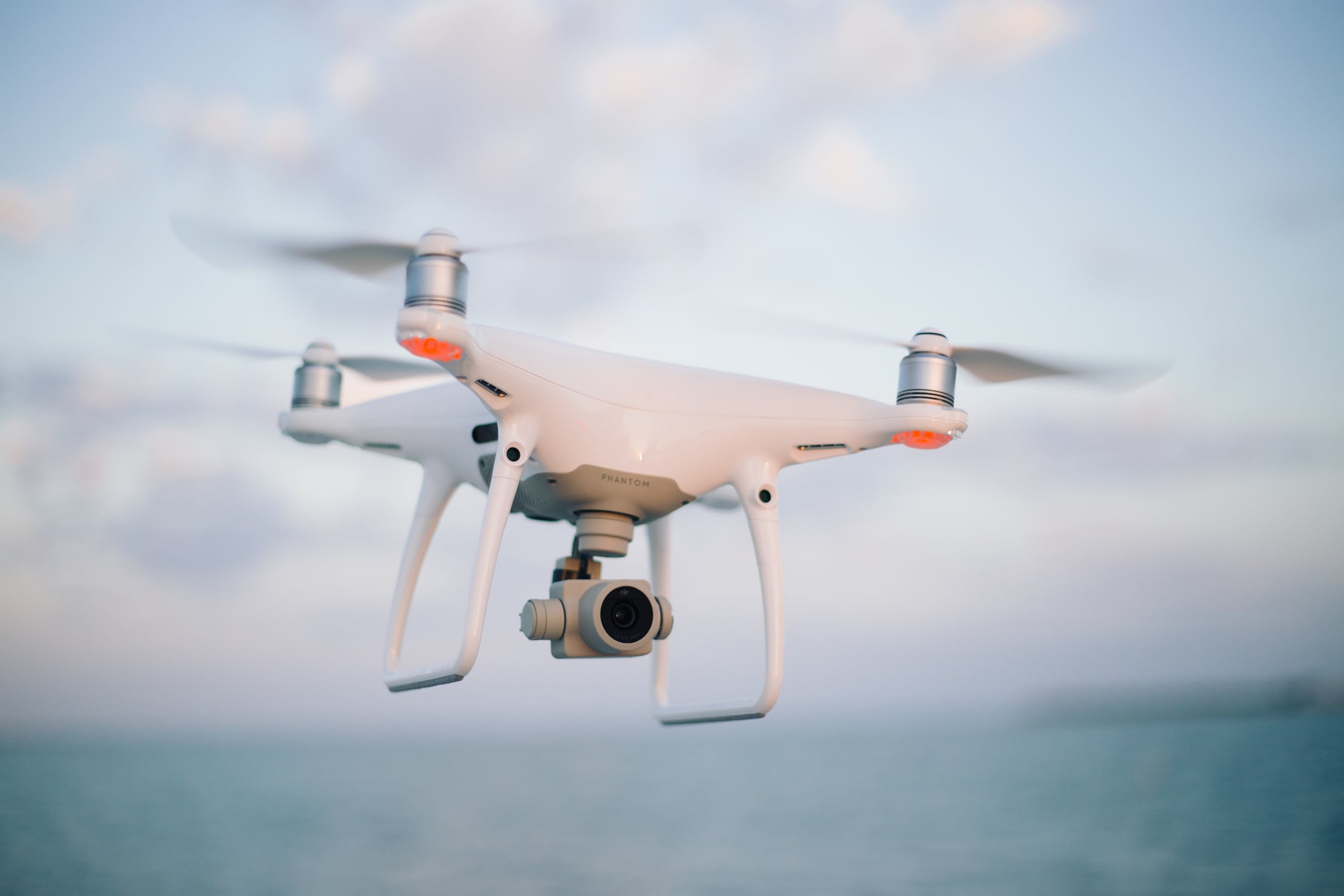
Narcotics detectives investigating Florida drug crimes in Miami-Dade recently employed a police drone to capture an alleged cocaine sale between a suspect and an undercover informant. According to The Miami Herald, this was a first in a criminal investigation. Its use had to be first approved by a judge in a case against a 31-year-old accused of numerous drug and weapons charges. Fort Lauderdale defense lawyers

Our Fort Lauderdale defense attorneys understand this news comes right as lawmakers in Florida are weighing whether to approve limited expansion of police drone use. Law enforcement agencies throughout the country have increased their purchases and use of drones as the technology has gotten cheaper – even as defense lawyers have raised concerns about civil rights and privacy intrusions.

The Center for the Study of the Drone at Bard College reports some 900 agencies in the U.S. (most of those law enforcement) purchased the lightweight, unmanned aerial devices in 2018. That number will soon be updated for 2019, and it’s expected to be much higher. Some police agencies anticipate that the use of drones by cops will someday be as ubiquitous as body cameras. But there is legitimate skepticism about the legality of these devices, particularly where agencies have declined to provide information to the public about their drone programs. For instance, police agencies in Southern California won’t release any details of their drone operations, despite one city claiming it has carried out more than 1,000 drone missions in a single year leading to well over 100 arrests.

Some departments have been criticized for flying drones over certain crowds of protesters, raising concerns about government spying. Continue reading

The saying goes that one man’s trash is the next man’s treasure, basically meaning that we all place different value on material goods. But in the case of a South Florida defense attorney, it’s more likely to refer to the fact that you’re literal trash may be the treasure of a prosecutor seeking to put you behind bars. South Florida defense attorney

With the proliferation of DNA evidence as key to prosecutions, digging through a suspect’s trash has become a growing source of evidence for many state and federal attorneys. Generally speaking, unlike the contents of your home or even a DNA test of your own bodily fluids, once your trash is carried to the garbage for disposal, it becomes fair game for law enforcement authorities to access – without a warrant. As established in the 1978 federal case of U.S. v. Crowell by the U.S. Court of Appeals for the Fourth Circuit, you have no reasonable expectation of privacy per the Fourth Amendment for the garbage you place outside for collection. In fact, so-called “trash pulls” have become a veritable treasure trove for some narcotics units in Florida. In some cases, it even becomes the basis for securing a search warrant on your actual home.

However, it’s not unheard of for police agencies to get too hasty in their quest to gather evidence sufficient for probable cause to secure a warrant to fail to obtain adequate evidence prior to requesting that warrant. For example, simply finding cocaine residue or marijuana seeds in the bottom of a trash bin may in fact be insufficient, thus leading to an affidavit that is deficient for the warrant that is ultimately signed. Based on the fruit of the poisonous tree doctrine, that could mean everything that is found thereafter is inadmissible (if your criminal defense lawyer files a motion to suppress) – and may result in an entire case being tossed.  Continue reading

Citing a sizable increase in motorcycle registrations across the country in recent years, ridership increasingly including women and older Americans, the U.S. Senate passed a bipartisan resolution condemning motorcycle profiling by law enforcement. Fort Lauderdale criminal defense attorneys know many arrests in South Florida begin with traffic stops, and it’s important to confront outdated stereotypes of motorcyclists as scofflaws and gang members. Fort Lauderdale motorcycle profiling

Nothing about Senate Res. 154 creates any hard-and-fast laws pertaining to motorcycle riders or motorcycle profiling. However, what it does is urge law enforcement agencies to reconsider their policies with regard to traffic stops involving motorcyclists and adopt training and directives to put a stop to discriminatory practices by patrol officers. Basically, the resolution indicates that people traveling on motorcycles should be treated the same as any other motorist moving through traffic. As reported by The Drive, a recent survey of motorcyclists said that at some point in the last two decades, they felt they had been targeted and profiled by law enforcement at least once for riding a motorcycle.

The VP of Government Relations for the American Motorcyclist Association lauded the resolution as bringing us one step closer to halting the practice of motorcycle profiling. Lawmakers noted that passing a law banning motorcycle profiling would likely be difficult, though they did in 2015 pass a measure that prohibited any federal dollars for the purpose of motorcycle-only checkpoints.

Contact Information